📊 Deep Dive: Costs, Installation, and Policy
Costs and Competitiveness
Costs fell 10% in 2024 (IEA) — a real win — but inflation and supply chain chaos are eating those gains. LCOE comparisons that ignore full system costs (grid reinforcement, storage integration) overstate the benefit. Offshore wind's levelized cost is only competitive where subsidies exist. Without policy support, many projects become uneconomic.
The broader picture is clear: renewable investment jumped 38% to $480 billion in 2024 (IEA WEO 2024), driven by solar's dramatic cost decline. Solar capacity doubled to 657 GW globally. But offshore wind — despite its higher capacity factors and baseload potential — has struggled to match solar's economic momentum due to higher capital costs and complex installation requirements.
The Installation Race
China dominated 2024 with 8 GW of offshore wind, per Ember's analysis. Ember reports 263 GW of targets across 27 countries. The gap between targets and installed capacity is widening — not closing. Europe's pace has surged but started from zero a decade ago.
The installation race is becoming less about technology readiness and more about supply chain constraints: specialized vessels, port infrastructure, and skilled labor. China's state-directed investment gives it a structural advantage in the near term.
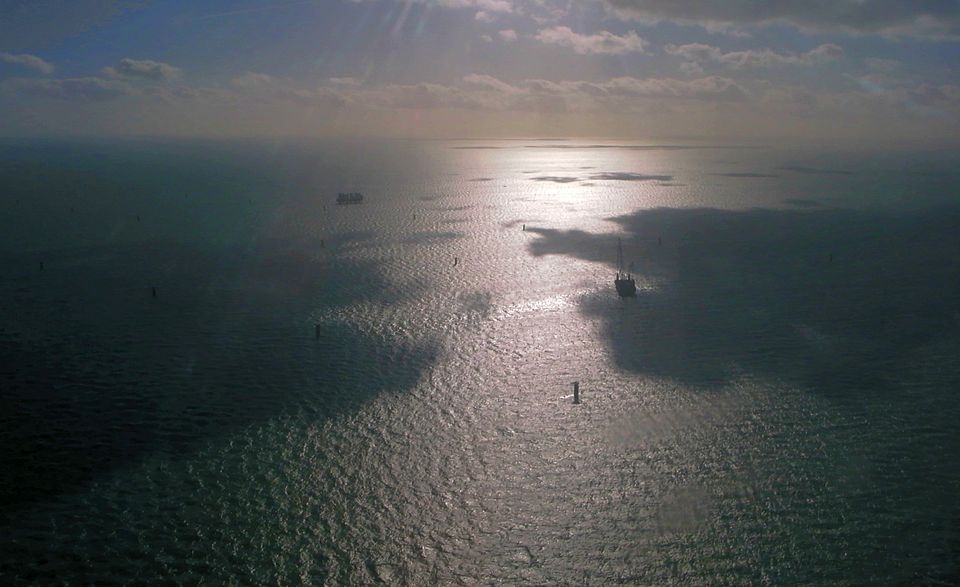
Policy Whiplash Timeline
Policy has been a rollercoaster for offshore wind investors. Here's the key timeline:
| Year | Policy Event | Impact |
|---|---|---|
| 2019–2020 | UK Crown Estate lease rounds | First major offshore wind auctions |
| 2021 | EU REPowerEU plan | 15 GW target by 2026 |
| 2022 | US Inflation Relief Act | $370B clean energy tax credits |
| 2023 | UK energy price cap | Offshore wind PPA prices surge |
| 2024 | US DOE loan guarantees | First US offshore wind financing |
| 2025 | EU net-zero industry act | Streamlined permitting for renewables |
| 2026 | UK CfD Round 7 | Lower strike prices, higher volume |
The paradox of offshore wind: the technology works, the economics are improving, yet every market has seen projects cancelled or delayed due to policy uncertainty — not market signals.
What It Means
The data suggests three conclusions:
- Costs are falling but not fast enough to overcome the installation bottleneck without subsidies.
- China's lead is structural — state-directed investment in vessels and ports creates a moat competitors can't easily cross.
- Policy consistency matters more than policy ambition — markets need decades-long certainty, not just ambitious targets.
Without policy stability, offshore wind's potential remains untapped — regardless of how competitive the technology becomes.